Introduction
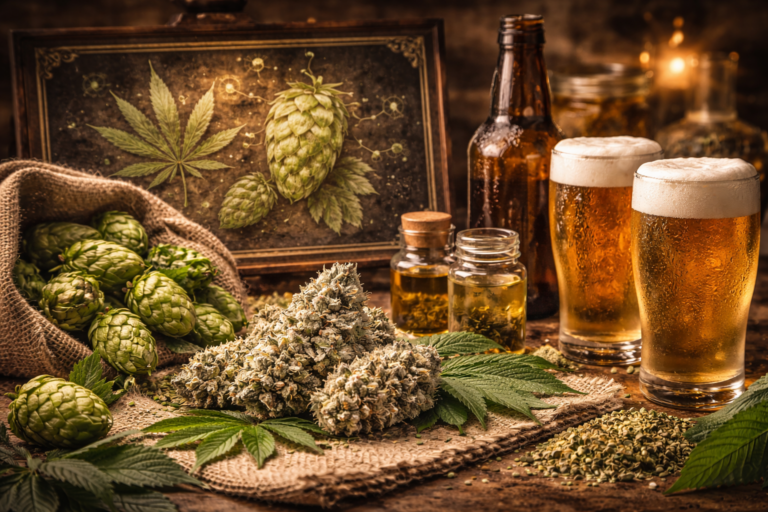
At first glance, hops and cannabis may seem like two very different plants. While one is commonly associated with the brewing of beer, the other is known for its psychoactive and medicinal properties. However, upon closer examination, these two plants share a surprising number of similarities that go beyond their botanical classification. In this article, we will explore the fascinating world of hops and cannabis, delving into their common terpenes, trichome structures, and potential therapeutic applications.
Botanical Cousins: Hops and Cannabis in the Cannabaceae Family
Hops (Humulus lupulus) and cannabis (Cannabis sativa) both belong to the Cannabaceae family, a group of flowering plants that also includes hackberries and other species (Yang et al., 2013). This shared botanical lineage is the foundation for many of the similarities between these two plants, from their physical characteristics to their chemical composition.
One of the most striking similarities between hops and cannabis is their growth habit. Both plants are dioecious, meaning they have separate male and female plants. In both cases, the female plants are of particular interest, as they produce the resinous flowers that are used in brewing (in the case of hops) and for their medicinal and psychoactive properties (in the case of cannabis) (Small, 2015).
Terpenes: The Aromatic Link Between Hops and Cannabis
Terpenes are aromatic compounds found in a wide variety of plants, including hops and cannabis. These compounds are responsible for the distinctive aromas and flavors associated with different plant varieties, and they also contribute to their therapeutic effects (Booth & Bohlmann, 2019).
Hops and cannabis share several common terpenes, including myrcene, humulene, and beta-caryophyllene (Eyres et al., 2021). Myrcene, known for its earthy and musky aroma, is the most abundant terpene in hops and is also found in high concentrations in certain cannabis strains. Humulene, which imparts a woody and spicy scent, is named after the hop plant (Humulus lupulus) due to its prevalence in hops. Beta-caryophyllene, with its peppery and spicy notes, is another terpene found in both hops and cannabis.
These shared terpenes not only contribute to the similar aromas of hops and cannabis but also have potential therapeutic applications. For example, beta-caryophyllene has been shown to have anti-inflammatory and analgesic properties (Gertsch et al., 2008), while myrcene has been investigated for its sedative and muscle-relaxant effects (Russo, 2011).
Trichomes: The Resin Factories of Hops and Cannabis
Trichomes are specialized structures found on the surface of many plants, including hops and cannabis. These hair-like outgrowths serve a variety of functions, from protecting the plant against herbivores and UV radiation to producing and storing resinous compounds (Wagner, 1991).
In both hops and cannabis, trichomes are the primary sites of terpene and cannabinoid production (Andre et al., 2016). The resinous secretions produced by these structures are responsible for the sticky texture and potent aromas associated with these plants.
Under a microscope, the trichomes of hops and cannabis appear strikingly similar. Both plants produce glandular trichomes, which consist of a stalk and a rounded head that contains the resinous secretions (Livingston et al., 2020). These trichomes are most abundant on the female flowers of both plants, highlighting their shared reproductive strategies.
Therapeutic Potential: Hops and Cannabis in Medicine
Beyond their similarities in terpene profiles and trichome structures, hops and cannabis also share a history of use in traditional medicine. Hops have been used for centuries to treat a range of ailments, including anxiety, insomnia, and digestive disorders (Zanoli & Zavatti, 2008). Similarly, cannabis has a long history of use in various cultures for its medicinal properties, particularly in the treatment of pain, inflammation, and neurological disorders (Zuardi, 2006).
Recent research has begun to investigate the potential therapeutic applications of compounds found in both hops and cannabis. For example, humulone, a bitter acid found in hops, has been shown to have anti-inflammatory and anticancer properties (Lee et al., 2007). Similarly, cannabidiol (CBD), a non-psychoactive cannabinoid found in cannabis, has been investigated for its potential in treating epilepsy, anxiety, and other neurological disorders (Perucca, 2017).
As research continues to unravel the complexities of these plants and their constituents, it is becoming increasingly clear that hops and cannabis share not only botanical similarities but also potential therapeutic applications. By understanding the common terpenes, trichome structures, and medicinal properties of these plants, researchers can develop new strategies for harnessing their benefits in the treatment of various health conditions.
Conclusion
The similarities between hops and cannabis extend far beyond their shared botanical family. From their common terpenes and trichome structures to their potential therapeutic applications, these plants have much to offer in the fields of medicine and research.
As legal restrictions on cannabis continue to evolve, it is essential to prioritize research into the various compounds found in both hops and cannabis. By doing so, we can unlock the full potential of these fascinating plants, developing new therapies and products that harness their unique properties.
Moreover, by understanding the similarities between hops and cannabis, we can begin to break down the stigma surrounding cannabis and its use in medicine. By recognizing the shared botanical and chemical characteristics of these plants, we can approach cannabis research with a more objective and scientific perspective, paving the way for new discoveries and innovations in the field of plant-based medicine.