Introduction
Cannabidiol, widely known as CBD, has rapidly moved from the fringes of scientific curiosity into mainstream wellness and medical conversations. As one of more than a hundred naturally occurring cannabinoids found in the cannabis plant, CBD stands apart for a key reason: it does not produce the intoxicating “high” commonly associated with THC. Instead, interest in CBD centers on its potential therapeutic value and its interaction with the body’s internal regulatory systems.
This article takes a closer look at where CBD comes from, how it works in the body, and what current research suggests about its possible benefits—while also addressing the limitations and unanswered questions that still surround it.
The Origins and Discovery of CBD
CBD was first identified in the early 1940s when researchers began isolating compounds from the cannabis plant. However, its precise chemical structure was not fully understood until the 1960s, when breakthroughs in cannabinoid research helped clarify how CBD differs from other cannabis-derived compounds. That work laid the scientific foundation for decades of subsequent research into cannabinoids and their biological effects.
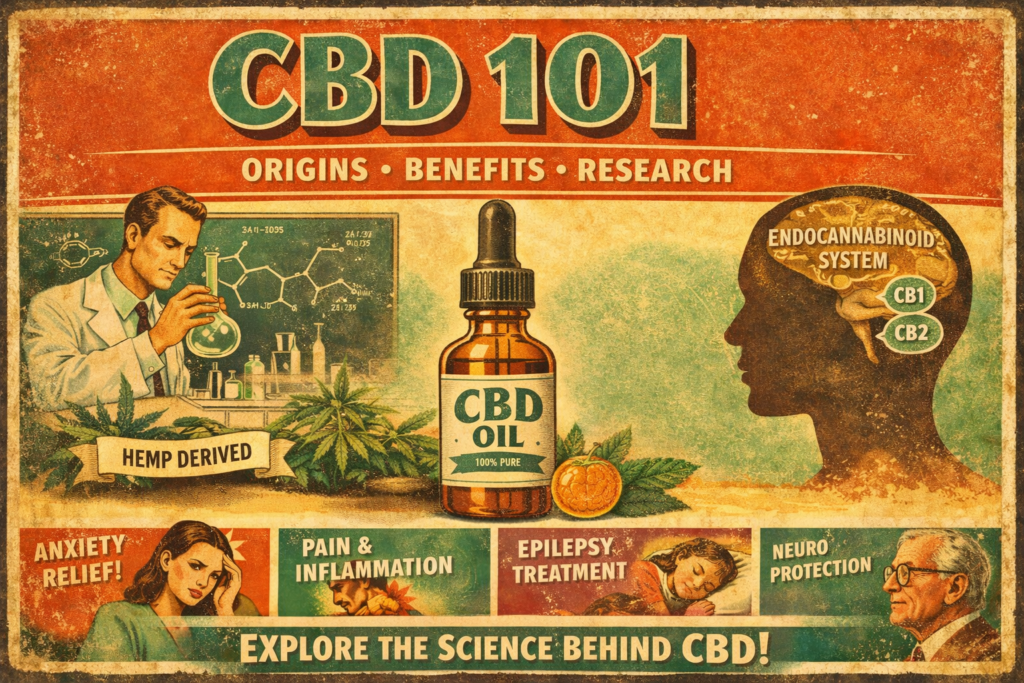
Today, most commercially available CBD is extracted from hemp, a variety of Cannabis sativa bred to contain very low levels of THC. In the United States, hemp cultivation and hemp-derived CBD products became federally legal following the passage of the 2018 Farm Bill, provided THC concentrations remain below 0.3%. This regulatory shift played a major role in accelerating consumer access and scientific interest in CBD.
How CBD Works in the Body: The Endocannabinoid System
To understand why CBD has drawn so much attention, it helps to understand the endocannabinoid system (ECS). The ECS is a complex signaling network found throughout the human body that helps regulate balance, or homeostasis. It influences a wide range of physiological processes, including mood, pain perception, immune response, sleep, and appetite.
The system relies on naturally produced cannabinoids (endocannabinoids), specialized receptors—primarily CB1 and CB2—and enzymes that regulate their activity. Unlike THC, which directly binds to these receptors, CBD takes a more indirect approach. Rather than activating CB1 or CB2 receptors outright, CBD appears to influence how these receptors respond and how long certain endocannabinoids remain active in the body. This subtle modulation is believed to be central to CBD’s potential therapeutic effects.
Areas of Therapeutic Interest
While research into CBD is still evolving, several areas have emerged as particularly promising based on early findings.
Anxiety and Stress Support
CBD has been studied for its potential calming effects, especially in relation to anxiety and stress. Research suggests that CBD may influence serotonin signaling, a pathway commonly targeted by traditional anti-anxiety medications. In controlled settings, CBD has been shown to reduce anxiety responses in stressful situations, such as public speaking simulations.
Pain and Inflammation
Inflammation and chronic pain are among the most common reasons people explore CBD. Preclinical studies indicate that CBD may help reduce inflammatory responses and modulate pain signaling pathways. These findings have sparked interest in CBD as a possible complement—or alternative—to conventional pain management strategies, though more human trials are needed.
Epilepsy and Seizure Disorders
One of the most significant milestones in CBD research came with the FDA approval of a CBD-based prescription medication for rare and severe forms of epilepsy, including Dravet syndrome and Lennox-Gastaut syndrome. This marked one of the first times a cannabis-derived compound achieved broad regulatory acceptance based on rigorous clinical evidence.
Neuroprotective Potential
CBD is also being investigated for its possible neuroprotective and anti-inflammatory effects in the brain. Early studies in animal models suggest that CBD may help mitigate neuroinflammation and oxidative stress—factors that play a role in conditions such as Alzheimer’s and Parkinson’s disease. While these findings are encouraging, clinical validation in humans remains limited.
Where the Research Stands Today
Despite widespread enthusiasm, it’s important to approach CBD research with measured expectations. Many existing studies rely on animal models, small sample sizes, or short-term observations. Large-scale, placebo-controlled human trials are still relatively scarce, particularly when it comes to long-term use, dosing standards, and interactions with other medications.
Regulation also remains a challenge. Although hemp-derived CBD is legal at the federal level in the U.S., the regulatory framework governing CBD in foods, supplements, and consumer products is still developing. This regulatory gap has contributed to inconsistencies in product quality, labeling accuracy, and potency across the market.
Moving forward, the most meaningful progress will come from standardized testing, clearer regulatory oversight, and robust clinical trials that evaluate CBD’s safety and effectiveness across diverse populations and conditions.
Conclusion
CBD represents a compelling area of modern scientific exploration—one that sits at the intersection of plant chemistry, neuroscience, and medicine. Its non-intoxicating nature and broad range of biological interactions make it a unique cannabinoid with real therapeutic potential.
That said, CBD is not a cure-all, and the science is still catching up to public interest. Responsible use depends on evidence-based information, quality-controlled products, and ongoing research that continues to clarify where CBD is most effective—and where its limitations lie.
As research advances and regulations mature, CBD is likely to remain a focal point in both scientific inquiry and consumer wellness discussions. For now, informed caution and realistic expectations remain essential companions to its growing popularity.